
Last Updated: October 28, 2026
Quick Summary
Clean beauty is not a regulated category with a shared definition or safety threshold, so its effectiveness depends on the formula and ingredients, not the label. Judge the ingredient, the concentration, and the formula rather than trusting clean beauty marketing claims.
- Clean beauty is a brand-defined marketing label, not a safety standard reviewed by any regulator.
- Natural does not mean safe; essential oils and fragrance can raise irritation risk for sensitive skin.
- Ingredients are ordered by concentration until the 1% mark, so a hero active listed near the bottom is likely low.
- Formula-level testing from independent labs is stronger evidence than small, self-reported consumer perception studies.
- Treat terms like chemical-free, non-toxic, and pure as warning signs, since they have no legal definition.
Table of Contents
- What Clean Beauty Actually Means (and What It Doesn't)
- Clean Beauty Ingredients: What the Evidence Says About Each Category
- Clean Beauty vs Conventional Skincare: Where Each One Wins
- Is Natural Always Safer? Dose, Exposure and Risk in Context
- Clean Beauty for Sensitive Skin: What to Patch Test and Avoid
- How to Choose Clean Beauty Products Without Falling for Greenwashing
- Independent Testing and Claim Verification: What to Look For
- Cost and Value: Are You Paying for Results or Packaging?
- Building a Routine With Lunevia That You Will Actually Keep Up
- Frequently Asked Questions
What Clean Beauty Actually Means (and What It Doesn't)
The term clean beauty is not defined by any regulator, which is exactly why it can mean almost anything a brand wants it to mean. At Lunevia, we treat it as a marketing label rather than a safety standard, and that distinction matters before you spend a penny. The phrase usually signals a product is free from a brand's own list of excluded ingredients, not that it has passed any independent review. There is no single authority that decides which ingredients qualify, so one label's "clean" is another's "not clean."
That flexibility is the root of most confusion. A brand can exclude parabens and still load a formula with essential oils that irritate reactive skin. Another can keep a preservative that has decades of safety data and call itself clean because it dropped something else entirely.
Clean beauty is a positioning term describing products marketed as free from certain ingredients, not a regulated category with a shared definition or safety threshold.
So when you ask whether clean beauty is actually effective, the honest answer is that effectiveness depends on the formula and the ingredients, not the label. Below, we break down what the evidence supports, what it doesn't, and how to read a product before you buy.
Clean Beauty Ingredients: What the Evidence Says About Each Category
Ingredient lists reward a closer look, because the word natural tells you where something came from, not whether it works or whether it is safe. Most guides treat clean beauty as one uniform category, but the evidence is ingredient-specific. Below we compare commonly used clean-beauty ingredients with established conventional alternatives, so you can judge a formula rather than a label.
Actives With Real Clinical Support (and Their Conventional Counterparts)
The useful question is not whether an ingredient is natural but whether it has evidence at the concentration used.
Natural Ingredients That Can Irritate
Natural does not mean safe, and this is where clean beauty claims most often overreach.
How to Read Concentration and Order
A brand that discloses the percentage of its key active is giving you something checkable.
The Bottom Line on Ingredients
The label alone does not establish a product's effectiveness.
Clean Beauty vs Conventional Skincare: Where Each One Wins
Neither side wins outright, and anyone telling you otherwise is selling something.
The real split comes down to formulation discipline.
Here is how the two approaches compare on the factors that actually affect your skin:
| Factor | Clean Beauty | Conventional Skincare |
|---|---|---|
| Definition | Brand-defined, unregulated | Broad, includes proven synthetics |
| Actives | Often botanical, variable potency | Standardized, tested concentrations |
| Preservatives | Limited palette, stability risk | Broad, well-studied systems |
| Irritation risk | Higher with essential oils, fragrance | Lower when fragrance-free |
| Transparency | Varies widely by brand | Varies widely by brand |
Is Natural Always Safer? Dose, Exposure and Risk in Context
No. Safety is a function of dose, exposure, and how a substance is used, not its origin.
Marketing that lists an ingredient as "toxic" without context ignores this entirely.
When a brand warns you about a "chemical" with no dose attached, that is a red flag, not a safety lesson.
Clean Beauty for Sensitive Skin: What to Patch Test and Avoid
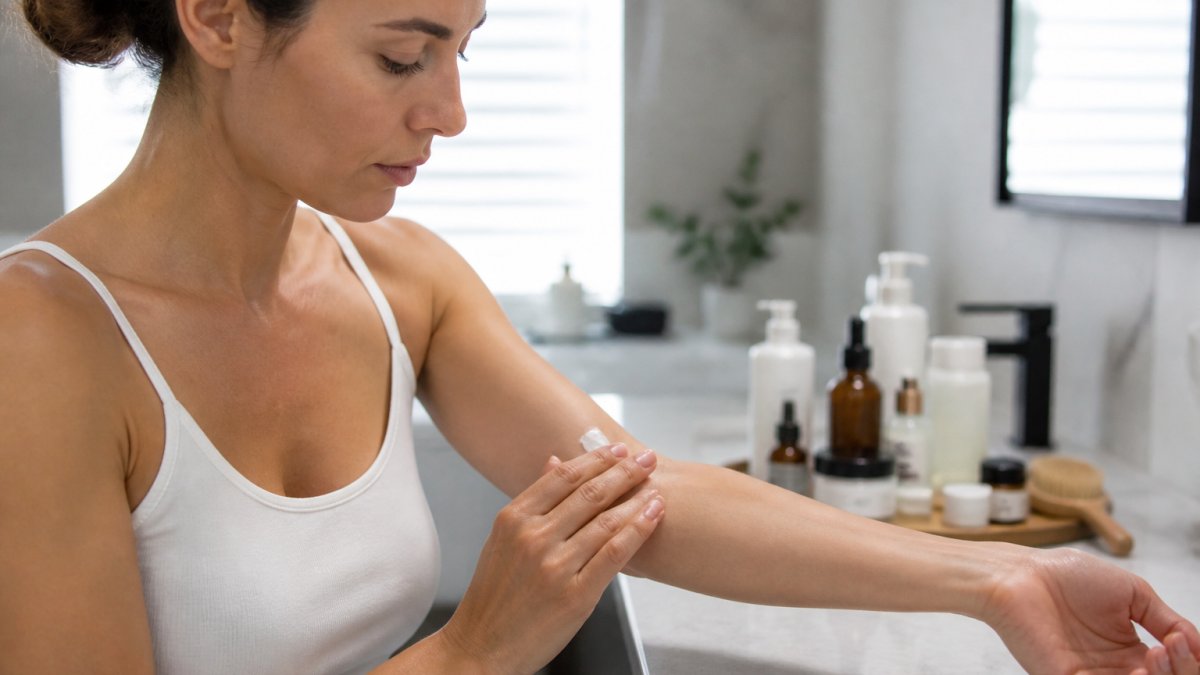
Patch testing is a habit some readers may choose to use.
For readers who want brand-level guidance, our guide to clean beauty brands for sensitive skin walks through options to consider.
How to Choose Clean Beauty Products Without Falling for Greenwashing
Greenwashing thrives on vague language, and clean beauty is full of it. Words like "chemical-free," "non-toxic," and "pure" have no legal definition in cosmetics marketing, so they can appear on almost anything. The fix is to ignore the front of the pack and read the back.
24K Gold Sakura Tear-Off Peel Mask – Spa Night Facial Treat →
Watch out: a brand that lists "chemical-free" on the label is telling you it does not understand basic chemistry, because every substance, including water, is a chemical. Treat that phrase as a warning sign rather than a badge of quality.
Four Checks Before You Buy
- Is the full ingredient list published, in order, with no "fragrance" hiding a blend?
- Does the brand name the concentration of its key active, or just list it near the bottom?
- Are the claims specific and checkable, or vague words like "pure" and "detoxifying"?
- Does the brand explain why each excluded ingredient was dropped, or just say "free from"?
If a product fails two or more of these, the clean label is doing more work than the formula. For a deeper walkthrough of spotting these tactics in real marketing, see our guide to identifying greenwashing in beauty.
Independent Testing and Claim Verification: What to Look For
Verification separates a real claim from a slogan, and it starts with asking who tested the product and how. Most guides stop at "do your research" without showing you what that looks like. Here is a practical method you can apply before you buy.
Step 1: Check the Ingredient List Against the Claim
Start with the back of the pack. If a serum claims to reduce redness, find the ingredient that is supposed to do that and check where it sits in the list. Ingredients are ordered by concentration until the 1% mark, so an active listed after the fragrance or preservative is likely present at a low level. A brand that discloses the percentage of its key active is giving you something checkable; a brand that lists a hero ingredient near the bottom is often using it for the label rather than the result.
Step 2: Ask What Kind of Evidence Backs the Claim
Evidence comes in different strengths, and the label rarely tells you which one is being used:
- Ingredient-level studies show that a specific active, at a specific concentration, did something in a study. This is the most common basis for claims, but it does not automatically transfer to a finished formula, because the other ingredients, the pH, and the packaging all affect how the active performs.
- Formula-level testing is stronger because it tests the actual product. Look for brands that publish results from independent labs or third-party testing, not just in-house studies.
- Consumer perception studies ("92% saw smoother skin") are the weakest form. They are often small, self-reported, and not blinded. Treat them as marketing until you see the method.
Step 3: Look for Third-Party Testing and Certifications
Independent testing is not the same as a clean label. If a brand says "clinically tested," ask who ran the test and whether the results are published.
Step 4: Separate Efficacy, Safety, and Sustainability Claims
When you evaluate a claim, decide which of the three it is actually about.
Step 5: Treat Unverifiable Claims as Marketing
A brand that lists "chemical-free" is telling you it does not understand basic chemistry, because every substance, including water, is a chemical. Treat that phrase as a warning sign rather than a badge of quality.
If you want a practical method for checking whether a brand's clean beauty claims hold up, our walkthrough on how to verify clean beauty claims lays out the exact steps. The short version: demand specifics, follow the ingredient list, and treat any claim you cannot verify as marketing until proven otherwise.
Cost and Value: Are You Paying for Results or Packaging?
A higher price does not by itself establish a product's performance. Our article on why luxury skincare costs more explains what drives the price of premium formulas.
Value comes down to what is inside the jar.
Building a Routine With Lunevia That You Will Actually Keep Up
A routine can be kept simple to fit into a busy day.
At Lunevia, we curate across beauty, fitness, and fashion. Our minimalist beauty routine for busy professionals shows how to build a sequence step by step.
One product for an at-home spa night is our 24K Gold Sakura Tear-Off Peel Mask, a tear-off peel mask. The listing advises patch testing before first use and avoiding the eye area.

Best for: a weekend self-care moment.
Frequently Asked Questions
Can clean beauty products actually be effective?
Effectiveness cannot be determined from the clean beauty label alone.
Does clean beauty mean a product is safer or less irritating?
A clean beauty label alone does not establish whether a product is safe or irritating for an individual.
How can you tell whether a clean beauty product is backed by evidence?
Look for specifics rather than adjectives. You can ask a brand about its ingredients, testing, and sourcing.
Is clean beauty worth the higher price compared with conventional skincare?
A higher price alone does not establish that a product will work better. If you are paying more, consider what specific features matter to you.
The challenge is not finding more products; it is cutting through the noise to a routine you trust. We built Lunevia around a curated selection that fuses style with self-care, so your daily ritual supports your skin's glow without demanding more of your time. Explore the collection, start with a short routine, and keep only what works for you. Get started with Lunevia and build a routine you will actually keep up.
